Seven
Why do Christians value this magical pagan number so much?
It's interesting that Christians consider Fingers Crossed to be superstitious nonsense (even though it has Christian origins), yet the number seven plays an important part of their religion (even though the number is deeply associated with ancient Paganism).
Why is this number considered so lucky (or unlucky)? Why do Christians use it so much?
Magnificent Seven

Seven is the most likely answer when asking somebody their lucky number.
Why?
Seven is a special and mystical number, the history of which goes way, way back.
In the 6th century Pope Gregory the Great defined a set of seven negative attributes that must be avoided. He instructed the best way to avoid these sins was to adopt seven positive attributes. The three Theological Virtues defined by St. Paul (faith, hope and love) added to the four Cardinal Virtues (prudence, temperance, courage and justice) give us the Seven Heavenly Virtues

For the Seven Deadly Sins, there are Seven Contrary Virtues. There are also medieval instructions for helping others, giving us the Seven Corporal Works of Mercy.
There are lots of other sevens too. Initially there were seven Stations of the Cross and there are Seven Sacraments. Seven appears in the Bible much more frequently than other numbers. For example, many times people asked Jesus who He was, and in reply, Jesus compared Himself to different things to help us understand. The Gospel of John records seven of these: the Seven I ams
More details can be seen on our page: Seven in the Church.
But why seven? Why not six? Or eight?
The answer is simple:
Paganism, ancient beliefs and religions
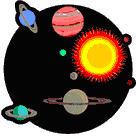
The seven celestial bodies
In the earliest civilisations, man realised there is more to life than his own little world. He looked at the biggest and brightest physical entities as the most important and highest powers.
The Sun is one obvious power and was worshipped as a god. The moon is also pretty big, mysterious and powerful, and that too was considered to be a god. In fact all the celestial bodies were considered deities, and as far as the ancients were concerned, there were seven such celestial bodies. They were so great and powerful that they not only influenced human affairs and personalities but also supernatural things such as luck and fate.
Later, more heavenly bodies could be seen by telescope but by that time, civilisations were already committed to the seven gods. When 'time' was being measured by astrologers and astronomers, seven became the number of days in the week (see days-months-seasons).
Ancient religions adopted this number: the Egyptians had seven gods, Parsees seven angels, Persians seven sacred horses, and Phoenicians seven mysterious kabiris gods. (The kabiris were so mysterious that the Phoenicians didn't know for certain how many there were, but they believed seven nonetheless.)
Christianity
See Seven in the Church.
Islam
Islam teaches seven heavens and seven articles of faith:
- Belief in Allah
- Angels
- God's Scriptures (Torah, Bible, and Qur'an)
- God's Messengers (Adam, Moses, Noah, Jesus & Muhammad)
- Day of Resurrection
- Destiny
- Life after Death
The phrase "seventh heaven" originates from both Islam and Judaism, which posit that the seventh (Life after Death) is the highest and most exalted. The extended meaning of "a state of intense happiness" can be traced back to the late 1700s.
Hinduism and Buddhism
In the philosophies of Indian yoga, Chakra is a centre of spiritual energy in the human body. There are six of these wheels spinning away, stacked vertically from the base of the spine to the top of the head. And there's a seventh which is above all these, beyond the physical body. Different cultures at various times have described chakras differently, and a popular understanding is that the seven chakras correspond to different aspects of a human being:
- Communication with God
- An overview of life
- Communication with others
- Deeper emotions
- Vital energy
- Instinct
- Body
Others
Minority religions and ideologies also revere the number seven.

Around the world, particularly in Europe and the USA, Nazis see three sevens as an anti-anti-Christ; their profound and deep-thinking rationale being that 777 is the result of adding 111 to the demonic 666. Oh yeah!
In Iraq the Yazidis (known to themselves as Daasin) recognise seven great spirits, who emanate from the supreme being and Creator known as Yasdan. The greatest of these spirits is the Peacock Angel known as Malak Taus. In early Christianity the peacock symbolised immortality, because its flesh doesn't appear to perish. Persecution from other religions, however, is causing Yazidism to perish.

In Japan there are seven gods, seven bushido, seven samurai, and even "777" in some of their toilets! (See Lucky Seven in Japan.)
In Korea on 21 October 1970, the Rev. Sun Myung Moon conducted a simultaneous marriage blessing ceremony for 777 couples.

In gambling, Las Vegans see triple seven as a winning line on a slot machine.
Being dealt three sevens in Blackjack is a winner.
The opposite sides of a six-sided die always total seven. For two six-sided dice, seven is statistically the most common combined number of two rolled dice.
Nature
Some natural phenomena support the notion that seven is important. For example, the moon changes phase every seven days and seven phases of the moon are visible.

Music scale of 7 notes
We see seven colours in the rainbow and the seven musical notes of the diatonic scale (do, rei, me, fa, so, la, te) are considered the most pleasing to the human ear.
Depending on whether it's a weekday or week-end, the average person falls asleep in seven minutes and sleeps for around seven hours.
In addition to the supposed connection between eleven and the World Trade Center attack on September 11, 2001, seven appears in another bizarre US story: The coincidences between Presidents Lincoln and Kennedy.
There are seven continents (Europe, Asia, Africa, North America, South America, Australia, and Antarctica).
We refer to the Seven Seas and there are Seven Wonders of the Ancient World.
All the above can be refuted, and you'll see below that seven is no more a 'natural' number than any other. But it's popular anyway, especially by numerologists, who regard many numbers as 'special'.
For example:
Two

The material and the spiritual. The human and the divine.
The two 'yin-yang' primal opposing but complementary forces found in all things in the universe. (Actually not all things – gravity, for example – as explained on the yin-yang page.)
And the animals went in two by two. Before the great flood, God instructed Noah to load up two of each kind of animal. (Actually there were seven of each type. See Gen. 7:2-3)
Three

In science
The three-legged tripod: geometrically the most stable structure.
In China
Heaven, earth and mankind. This was coined by the Triad, a general term for branches of Chinese underground organizations based in Hong Kong, Taiwan and mainland China, and spreading out to Chinese communities around the world. These societies were originally formed in the Qing Dynasty to resist the Manchu Emperor. The name 'Triad' (Sanhehui) meant 'Three Harmonies of Society' – unity of heaven, earth and mankind.
In Texas
The Three Kick Rule.
In Christianity
The Holy Trinity of God (Father, Son and Spirit) and the three Theological Virtues (faith, hope and love).
Four

- north, south, east and west
Four appears frequently in natural phenomena, and in particular the four seasons, which symbolise completeness. (Climate change will force us to refine seasons, but probably we'll still refer to spring, summer, autumn and winter.)
The four cardinal points of north, south, east, west (see Cardinal Cross) and the four 'corners' of the earth (see St. Julian's Cross), similarly symbolising completeness.
The four primary (canonical) Gospels, which form the heart of Christianity. (See the Heart Cross and the Evangelists Cross)
Five

5 elements:
- Earth or stone (yellow, reserved for royalty)
- Fire (red, marriage and birth rituals)
- Wood (blue)
- Water (black)
- Metal (white, for mourning; hence Chinese wedding dresses are red, not white).
Five wounds Jesus received on the cross.
The five musical notes of the pentatonic scale are also considered the most pleasing to the human ear.
Then there are the five basic 'colours': yellow, red, blue, black and white. The ancient Chinese understood the universe to be based on these five colours (which changed over the years) and they associated 'elements' with these.
By the way; If one's lonely, two's company, and three's a crowd, then what's four and five?
(The answer's at the bottom of this page.)
Six
Six days taken by God to create the world.
Eight
888 is the sum of 8 consecutive prime numbers (97 + 101 + 103 + 107 + 109 + 113 + 127 + 131).
The numerical value of the name of Jesus in Hebrew is 888, a 'super number'.
There are eight beatitudes (Matt. 5:3-11) and 8 symbolises regeneration for many religious ideas. It is the holistic number in Buddhism for the number of steps to end suffering.
Our Hindu-Arabic numeral 8, like the lemniscate symbol for infinity  , is a never-ending line. (See also Everlasting Cross, Baptismal Cross and St. John's Cross.)
And so on.
Similar claims have been made about other numbers, especially double or triple numbers.
Eleven
Eleven is so magic and powerful that it brought about the end of WWI and made a good contribution to the next one. Now that's some pretty powerful magic! Read about it on our tongue-in-cheek Eleven page, and see also how eleven caused the 9/11 attack on the World Trade Center and the devastating 2004 Indian Ocean tsunami. (Conspiracy theories; the refuge for the feeble minded.)
Thirteen
The Grim Reaper is shown on the 13th card in most tarot decks. It means death, or new life, or something in between, or whatever you want it to mean. Only he, the Grim Reaper himself ("he"?), understands what 13 really means, though it's not clear why an angel of Hades has to rely on any number which is an abstract object created by the human mind.
No need to overthink that point.
Lucky or unlucky depends on whether you are the seller or buyer of a 13-year-old 1300 cc car with 130,000 miles on the clock.
On 23 June 2018 a schoool football coach and twelve boys (average age thirteen) went for a celebration party in the Tham Luang cave in Thailand. Four kilometres (2.5 miles) from the cave mouth they became trapped by floodwater. It took over a week for rescuers to find the group of thirteen and more than another week before the massive rescue operation were able to extract them.
The amazingly complex and nail-biting rescue operation captured the world's attention and "13" became a lucky number in Thailand; especially so for Songpol Kanthawong and Tsaweechai Namsang, both aged thirteen, who had been unable to take part in the trip.
The opinions of the superstitious are their own. The rest of the world, however, are just happy that the boys went home.
Six hundred and sixty six
One well-known repeating number is 666 – the mark of the beast.
But back to seven.
Lucky seven?
In (chiefly British) slang, to "knock seven bells" out of somebody is to give them a good beating, although why any beating should be called "good" is not clear.
The phrase is believed to originate from the nautical system for lookout watches, which last for four hours. Every 30 minutes, a bell is struck to inform the next watchman to take over, and the eighth bell signals the end of the watch. The seventh bell is, therefore, near the end of the watch. So to knock seven bells out of somebody is to beat them to within an inch of their life (another curious idiom, which really means within an inch of death), and seven becomes a lifesaver.
Of course, seven is not always lucky:
- Many people think there are seven nail holes in a horseshoe – itself a lucky symbol – but actually there are usually eight. Anyway, the hundreds of horseshoes in place for Lt. Colonel Custer's last stand against the Cheyenne in the 1876 Battle of the Little Bighorn were not lucky for him. His regiment was the Seventh Cavalry. ('Seventh' 7 letters, 'Cavalry' 7 letters)
- In Tenerife at 17.06 on March 27, 1977, a KLM 747 crashed into a PanAm 747 flight number 1736 killing 583 people making this the worst ever plane disaster.
- Since its maiden flight in 1994 the Boeing 777 had no fatal accidents until the 7th month of 2013. The Boeing 777's luck changed tragically the following year when Malaysian flight MH270 disappeared with 239 passengers and crew. In the same year, a Boeing 777 Malaysian flight MH17 exploded over Ukraine with the loss of 298 lives.
As at the date of writing (18 July 2014), the cause of either disaster had not been determined, but the consensus is human failure, rather than mechanical failure, design failure, or anything supernatural.
- And whilst talking about flight, here's an old English rhyme about crows and magpies, linking seven with Satan:
- One means anger
- Two means mirth
- Three, a wedding
- Four, a birth
- Five is heaven
- Six is hell
- But seven's the very devil himself.
- One superstition says that if you break a mirror then you will have seven years of bad luck, unless you bury the broken pieces. (The bad luck will transfer to whoever accidentally digs up the broken pieces, cuts their hands, and contracts tetanus.)
The number seven in commerce
Whilst seven is just a mathematical object we have manufactured. and not naturally or supernaturally special, our culture has made it special.
Even in corporate culture, the number is popular. 'Seven Principles of Good Practice' frequently pops up in Mission Statements and Harrods staff in London are required to perform 'Seven Steps of Exceptional Service'. (Even on this site, we've identified Seven steps for fixing problems with awkward relatives and friends who insist on 'helping' at your wedding, and Seven steps for dealing with procrastination)

The common misconception that seven is 'lucky' has not escaped the attention of marketing people. Take for example the prominent Seven in the badge of the Seven-Eleven convenience store founded in 1927. See Seven in Commerce for seven other famous brand names, all of which have been hugely successful.
The number seven in literature
The number seven is popular in literature:
- 'Salome and the Dance of the Seven Veils'
- Akira Kurosawa's Shichi-nin no Samurai ('Seven Samurai') and the American copy 'The Magnificent Seven'
- 'Seven Brides for Seven Brothers'
- 'The Seven Year Itch'
- 'The Seven Deadly Sins'
- Edward Lear's The History of the Seven Families of the Lake Pipple-Popple. Each family had seven children but since all the children are treated as one group, there is no reason for there to be seven — other than to capitalise on the popularity of the number.
- Enid Blyton's 'The Secret Seven'
and a few others. (We also wanted to mention Grimms' Fairy Tales 'Snow White and the Seven Dwarfs', 'The Seven Swabians', 'Seven Ravens', but decided to limit the above list to seven titles.)
A quick analysis of the Grimms' Fairy Tales, since those stories are riddled with numbers, reveals that seven is more common than neighbouring numbers:
| six/sixth/sixty | 90 times |
| seven/seventh/seventy | 161 times |
| eight/eighth/eighty | 24 times |
Seven is also a significant number in Christian literature, Jewish literature and the literature of many other religions. And seven does appear in the Bible much more frequently than adjacent numbers:
| six/sixth/sixty | 199 times |
| seven/seventh/seventy | 320 times |
| eight/eighth/eighty | 117 times |
(See Seven in the Bible)
Curious seven
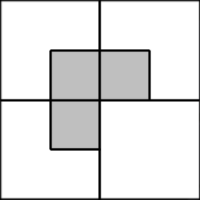
- Click on the image above and do the quick puzzle
- When you've finished, consider why the puzzle's designer chose seven for the final frame
Yes, the average person may fall asleep in seven minutes and sleep for around seven hours, but we must be cautious in saying this is 'natural'. Primitive man had a completely different lifestyle to ours today and no doubt he had a different sleep pattern.
'Seven' may be the smallest positive integer requiring two syllables in English yet English, as we all know, is full of quirks.
And the opposite sides of a six-sided die always totalling seven might be mildly interesting, but it doesn't contribute much to life, unless you are a gambler. Seven is the most common combined number of two rolled dice because of statistical probability; there is nothing supernatural about it.

Courtesy of United States Geological Survey (USGS)
Seven continents, yes, but only in recent history. The planet's land mass above sea level is constantly shifting, merging and splitting, rising and sinking. In the Permian Period (about 250 million years ago) there was effectively just one continent (a pretty big one) and one ocean (even bigger).
Seven seas? Open an atlas and start counting; you will soon find more than seven seas in the world.
There are more than seven celestial bodies. Had there been eight planets visible to the naked eye, no doubt we would have eight days in the week, have an eighth 'Sea' and an extra Wonder. If we take even a cursory look at nature, we see there are an infinite number of wonders.
The moon does change phase every seven days but that is just earth's moon. Countless other planets have moons, each with their own particular behaviour.
Yogis will agree that man has more than seven 'aspects', and these overlap. There are not seven colours in the rainbow; there are six main colour bands and an infinite number of hues. And there are not seven musical notes of the scale in all cultures. Seven was chosen to grade and measure such things, because that's a number we've become comfortable with.
Why do Christians value this magical pagan number so much?
They don't. Christians value the sacrifice that Jesus Christ made for mankind. Seven isn't even worth thinking about.
When Pope Gregory and others introduced seven attributes and sacraments, the important things are the attributes and sacraments, not the number.
Similarly, there is nothing magical about seven in the Bible – it's common sense to speak in familiar terms to the reader. If there were eight days in the week, then the eighth would be the day of rest. The important point is not seven, or eight, or any other number – the point is that we should observe some time for God. We should keep a regular time in our lives to reflect, worship, or whatever our religion requires to prevent us from becoming self-centred.
Other 'lucky' pages:
What's four and five?
Nine, of course!
We think we see seven colours, but we don't – as explained for the Rainbow Cross
On 6 July 2013 (month 7) Asiana Airlines Flight 214 (2+1+4=7) crash landed at San Francisco with 307 passengers. Despite the huge fireball, 305 passengers survived. The cause may have been a result of the inexperienced pilot's error, flying well below the target landing speed of 137 knots per hour, or 157 mph. Seven seconds before the crash, the pilot recognized the need to increase speed. But sadly, that was too late.
See Christ the Redeemer for one of the New Seven Wonders of the World, designated on 7 July 2007


