Triskele


Where the four limbs of a cross are usually referred to as 'arms', the Triskele limbs are referred to as 'legs'. The members resemble bent arms as much as they resemble bent legs, but the word 'triskele' comes from the Greek treis, meaning 'three', and skelos, which means 'leg'.
The symbol (also called Triskelion) is found on the flags of Sicily, the Isle of Man, and Ingushetia.
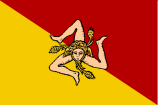
Sicily
The ancient name of the huge Italian island region of Sicily is 'Trinacria', and the symbol on their flag represents good luck. (In the centre is the head of Medusa with wings and three wheat ears. The image of this Greek goddess has been used as an evil-averting talisman, and more recently, the logo for the Italian designer, Versace.)
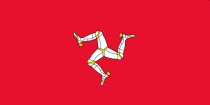
Isle of Man
In the flag of the Isle of Man at the geographical centre of the British Isles, the symbol comes from an old Celtic sun symbol. Today, it is seen by some locals as defiantly kicking out invaders from the surrounding lands of Scotland, England and Ireland (see map).

Ingushetia
The Republic of Ingushetia is in Russia's troubled North Caucasus region (see map), predominantly Sunni Muslim and neighbouring Chechnya. Like the Isle of Man, the symbol represents rays of the sun.
The Triskele is often called a three-legged swastika and the Third Reich adopted a variation as the insignia for a Waffen-SS division composed of Belgian volunteers. Currently it's the symbol of the White supremacist Afrikaner Weerstandsbeweging (AWB), and represents three sevens which are supposedly the numerical value of 'Jahweh' and wipes out evil from the anti-Christ number of 666. Jahweh is the Afrikaans spelling of the name of God in Judaism, and the name's gematric number is only 26. So it seems the AWB people didn't pay much attention at their elementary school's maths lessons.
We have a page about 666, the Mark of the Beast, and can see no reason why applying 111, 26 or any other number to 666 should cancel out evil.
But there are lots of things we don't know...
For example, we don't know whether the following a true story:
Three Legged Man
by Shel Silverstein
I just met the sweetest woman of my long dismal life
But a friend of mine said "Buddy, just in case your mind is muddy
Don't you know that girl you're fooling with is Peg-leg Johnson's wife.
And that man is big and rough and mean and grim
And he'll brain you with his artificial limb.
But next morning bright and early I stole old Peg-leg's girlie
And I also took his wooden leg just to play it safe
But there weren't no time for laughter 'cause he started hopping after
And I keep on running faster but he won't give up the chase.
And I'm running through the mountain with his bride
And I got his wooden leg here by my side.
I'm a three legged man with a two-legged woman
Being chased cross country by a one-legged fool.
Though he's huffing and he's puffing and he shows no sign of stopping
I tell you boys this life is hard and cruel.
'Cross the deserts and the valleys and the dark Chicago alleys
'Cross the mighty Mississippi to the hills of Caroline.
Through the mountains of Montana and the swamps of Louisiana
Every time that I look back he's just one foot behind.
And I know he must be cold and wet and sick
But in spite of all his woes he can kick.
Now he's ragged and his filthy and I'm feeling mighty guilty
'Specially in the evenings when I hear him plead and beg.
He says "In spite of all your stealing friend, I bear you no hard feelings
You can keep that darned old woman but please give me back my leg."
'Cause although the one you meant to take was wooden
In the dark by mistake you took my good'un!


