Wayside Cross

Remains of a
Wayside Cross

Wayside Cross in Herrschig, Germany. Photo by Nino Barbieri
(Click photo to enlarge)
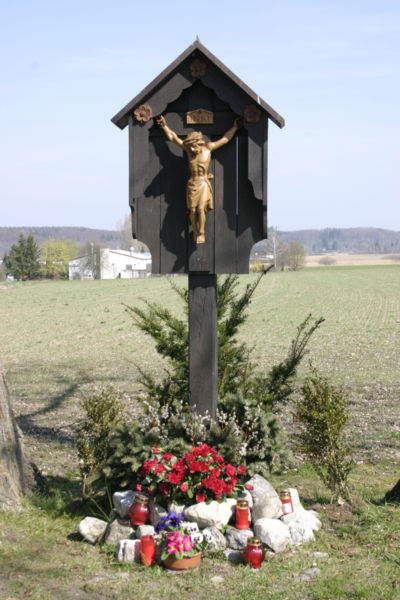
A Wayside Cross is any cross that has been erected by the side of a road or path and they are found all over the world, particularly in Europe. Many are very old and the decorative top parts are missing, either from natural erosion or from looting.
There were various reasons for erecting these; for example, as markers placed along routes used by Christian pilgrims, or as a shrine in reverence to a saint who had connection to the locality.
Another common purpose was to mark the boundary of the parish, which was also the same in many cases as the boundary of the town or manor. The markers indicated to the traveller that they were entering a sanctified area. (See Sanctuary Cross.)
Others mark a burial site, a disaster, a miracle, or some other event that should be remembered. In some cases they were erected to mark meeting places for Christian worship and later churches were built adjacent to the cross, resulting in the cross being within the church's walls. (See Churchyard Cross and High Cross.)
Wayside Crosses are typically made of stone, iron or wood, of modest size and appearance, and often neglected, especially if sited in the countryside. For protection from the weather, some are enclosed or semi-enclosed. (See also Enshrined Cross.)

The Stump Cross shown on the left is just the rebated plinth of a 12th century Boundary Cross located outside Pontefract, South Yorkshire, England.
The more famous crosses include those in Spain on the Pilgrim's Way to Santiago de Compostela and in England, the Eleanor Crosses dating from the late 13th century. A similar custom honoured St. Louis of France.
Prior to those two, when English St. Aldhelm died in 709, his body was carried from Doulting to Malmesbury. Later his friend Egwin, Bishop of Worcester, erected crosses in Aldelm's memory at the various places where the funeral procession had stopped overnight.
The practice of building wayside shrines is followed by all major religions (Islam, Buddhism, Hinduism, etc.) and especially ancient religions, where superstition has for long been closely intertwined with spirituality. Pagan shrines were believed to offer protection to travellers from bandits and evil spirits.
There are an unknown number of Wayside Crosses, many of which are featured in local history books and tourist guides. Many more have quite probably fallen into ditches and become covered with debris, just waiting to be discovered one day.
Some other parts of this cross were recovered from nearby garden rockeries and are now on display at the local museum.


