CRC emblem
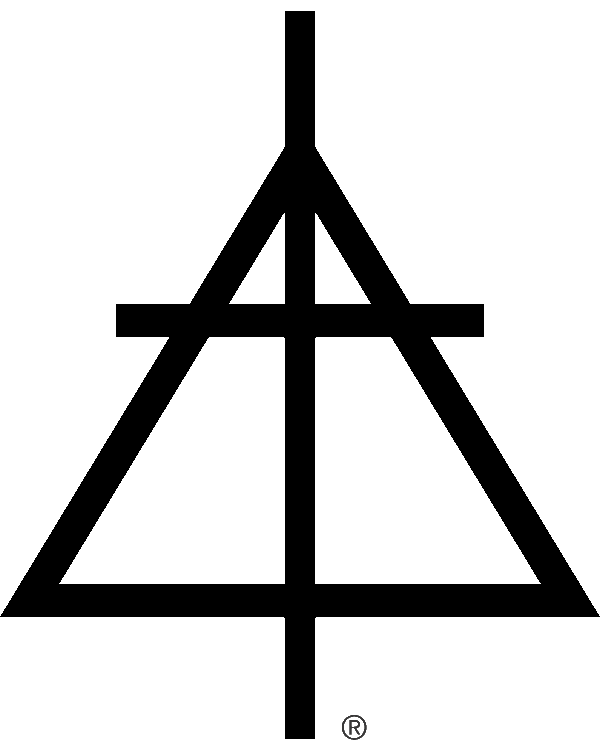
The Christian Reformed Church in North America has around 1,000 congregations across the United States and Canada, with outreach missions around the world.
Although their emblem is simply a cross and a triangle, the meaning is quite profound. The cross symbolizes their belief in Jesus Christ's sacrificial death for our salvation and the triangle symbolizes the Church's belief in the Trinity. (Source: crcna.org)
For those interested in numerical significances, 'three' also happens to correspond with the number of creeds, their basic tenets of faith: the Apostles' Creed, the Nicene Creed, and the Athanasian Creed.
For those really interested in numerical significance of 3, here are a few more:
- The Holy Trinity, as mentioned above. This is a founding doctrine of Christianity, that God exists as three persons in one essence: Father, Son (Jesus Christ), and Holy Spirit. God is one in nature, revealed in three distinct persons, each fully and equally God.
- Triduum, the liturgical observance of the three consecutive days at Easter: Good Friday (when Jesus died on the cross), Holy Saturday (when his body rested in the tomb), Easter Sunday (when he was resurrected and thereafter fully understood to be Christ).
- The Triple Prophecies of the Passion. Matthew records three times Jesus prophesied his death and resurrection: Matt 16: 21; 17:22-23; and 20:17-19.
- "We Three Kings Or Orient Are...." or rather, are not. The Bible doesn't say how many they were, or even if they were kings (though Psalm 72:10 refers to kings who will bring gifts to the Messiah - following the then practice for kings to offer gifts to other kings, in this case, King of the Jews). They were probably astrologers, in those days called magicians, hence the Biblical term magi. However many there were, they brought three gifts (gold, frankincense, and myrrh) which symbolizing kingship (gold being the most precious material to give to a king), divinity (frankincense, a resin used in incense burnt in ritual offerings to deity), and death (myrrh was used for embalming and as an anointing oil).
- The transition from night to day, announced by the crowing of the cock. At that time, Peter realised he had three times denied knowing Jesus (Luke 22:61). Peter repented, was forgiven by grace, and redeemed to lead the early Church (John 21:15-17)).
- Jesus’ triple prayers in the Garden of Gethsemane: Matt 26:36-44 before his arrest.
- Jesus’ triple prayers from the cross: Luke 23:34; 23:43; John 19:30
- In Christian thought, there are three theological virtues (faith, hope, and charity/love), as outlined in 1 Corintians 13:13.
- Faith: Trust in God and His promises.
- Hope: Expectation of eternal life with God.
- Charity (Love): The highest of the virtues, representing God’s love as the foundation for Christian living.
- The three patriarchs (Abraham, Isaac, and Jacob) are foundational to God's covenant with Israel.
- Three temptations of Jesus by Satan in the wilderness (Matthew 4:1-11), symbolising Christ's triumph over sin and temptation.
- The three covenants in the Bible: God's covenant with Noah, Abraham, and Moses.
- In Isaiah 6:3, the seraphim around the throne of God proclaim, “Holy, holy, holy is the Lord of hosts; the whole earth is full of His glory”. This tripartite declaration emphasises the supreme holiness and perfection of God, marking the number three as a symbol of divine perfection and completeness.
- The word "Amen" is used three times in some places, emphasising a strong affirmation or divine truth. For example, in Revelation 1:7-8, Jesus declares, "I am the Alpha and the Omega," followed by "Amen" three times, affirming the ultimate authority and completeness of His identity and work.
- Jesus’ public ministry is traditionally understood to have lasted approximately three years, which is a period that symbolises both the completion of His earthly mission and the perfection of His sacrifice.


